
The Scilly Isles
Episode 1 | 45m 47sVideo has Closed Captions
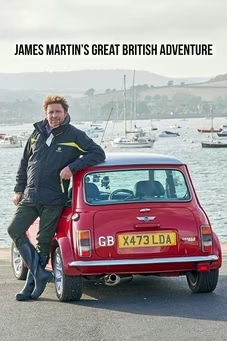
James journeys over the spectacular islands located off Cornwall.
James visits the spectacular islands located off Cornwall in the Southwest of England. He’s met by Michelin-starred chef Galton Blackiston, on a golf buggy (one of the best ways to get around). James sends Galton off to find out how Scilly salt is made and James hops on a boat to visit a small duck farm on the island of St Mary’s. They finish the show snorkeling with native seals!
Problems playing video? | Closed Captioning Feedback
Problems playing video? | Closed Captioning Feedback
The Scilly Isles
Episode 1 | 45m 47sVideo has Closed Captions
James visits the spectacular islands located off Cornwall in the Southwest of England. He’s met by Michelin-starred chef Galton Blackiston, on a golf buggy (one of the best ways to get around). James sends Galton off to find out how Scilly salt is made and James hops on a boat to visit a small duck farm on the island of St Mary’s. They finish the show snorkeling with native seals!
Problems playing video? | Closed Captioning Feedback
Where to Watch James Martin's Islands to Highlands
James Martin's Islands to Highlands is available to stream on pbs.org and the PBS app.
Providing Support for PBS.org
Learn Moreabout PBS online sponsorship[inspiring music] Here we go.
I'm going on my most ambitious British adventure yet.
Yes.
JAMES MARTIN (VOICEOVER): Meeting some of the finest chefs in the world.
You've been sweating over James.
What poor James.
Ooh.
JAMES MARTIN (VOICEOVER): Cooking my way from the far south-- Duck on a barbecue is just off the charts.
JAMES MARTIN (VOICEOVER): To the northernmost reaches of the land.
It's a magical experience.
You've got to do this.
It's amazing.
And using some of the best produce you'll find anywhere.
Come on, pigs.
Come on.
Come on.
MAN 1: Look, look at him.
How can you miss that mouth?
JAMES MARTIN (VOICEOVER): And some of the places require a little bit more effort to get to.
I'll be traveling by land, air, and sea.
MAN 2: Yeah, look, look.
Dolphins.
MAN 2: Dolphins.
JAMES MARTIN (VOICEOVER): So join me as I explore the British isles from islands to highlands.
[upbeat music] It's time to hit the road again.
And this year, I'm heading to parts of the British Isles that require a little more effort to get to.
[engine whirring] Look at this.
I'm starting my journey by visiting a small group of islands just off the Coast of Cornwall.
And I'm really excited about this because apparently they're beautiful and I've never been before.
JAMES MARTIN (VOICEOVER): They're called the Isles of Scilly, and they sit around 30 miles West of the Cornish Coast.
This beautiful archipelago of sand fringe islands are the furthest south you can travel in the UK.
And I'm beginning my adventure on the largest island, St.
Mary's.
It's almost something like the Caribbean-esque.
It's just groups of little islands.
It's a fantastic place.
Look at it.
You just know that this is going to be home to great produce.
JAMES MARTIN (VOICEOVER): The coastline here is absolutely stunning, and the crystal clear waters are full of world class seafood.
Inland is just as special as the islands have a microclimate, the flora and fauna is like something out of Jurassic Park.
What a place to start my islands to highlands adventure.
And there's only one way you can top arriving in style by helicopter, and that's to be greeted with a luxury car and chauffeur, which the crew have kindly arranged for me.
♪ ♪ Galton blooming Blackiston.
He might be a Michelin star chef and an old pal of mine, but talented driver he is not.
It's a bit excessive.
- What?
JAMES MARTIN: Rather large?
Oh, wow.
JAMES MARTIN: You look like.
Well, welcome to the Isles of Scilly and welcome to my mode of transport for today.
Quite like it, don't you?
- OK.
Right.
Are we off?
Yeah.
Come into my buggy.
I'm driving, I'm driving.
Get over there.
I'm driving.
You need to put your seat belt on.
Have you passed your test on stuff like this?
Listen, I can drive one of these, probably better than you can.
Really?
Yeah.
I know what I'm doing.
Off we go.
Ready?
Yeah.
Hang on.
You did that.
Turn it on.
You did that.
I didn't do anything.
Right.
You just press forward.
It's all right.
Come on.
JAMES MARTIN: Can we lose the hat?
It's upsetting me.
- Yes!
Yes, it's upsetting me and all.
JAMES MARTIN: So what do you know about the Isles of Scilly?
What do I know about it?
Not a lot.
Apart from the fact that all visitors go around in buggies.
If there's any vehicle that suits you, it's this.
What, because it's slow?
Yeah.
[laughter] So we're going to go and visit two places, a duck farm.
- Yeah.
- I'm going to.
And then you're going to go visit some people who make salt.
Perfect.
[upbeat music] So here we are.
JAMES MARTIN: This is Hugh Town.
Isn't this beautiful?
- Where are we going?
- We're going right.
You indicated.
Go turn right.
- Just put your arm out.
- How good is that?
Sorry!
Hey, mate,, This is special, isn't it?
GALTON: Isn't it?
- Look at this.
GALTON: Isn't it?
How stunning is this?
GALTON: It is lovely, isn't it?
JAMES MARTIN: Right.
This is where you're going to drop me off.
GALTON: OK.
- Indicate.
Yeah.
Yeah, you sit see on a conventional buggy, golf buggy, they don't have indicators.
Indicate.
I'm getting off, and then I'll speak to you later.
- All right.
- Enjoy the salt farm.
- Yeah.
- If you can find it.
[soft music] JAMES MARTIN (VOICEOVER): Right, it's time to get cooking, and I've found a secluded little bay to rustle up a simple pollack dish with a bean and tomato stew.
Because I'm here, and I love it here in this amazing bay, that I'm not going to tell you where it is, because I don't want you to all turn up.
It'll spoil it.
It's just beautiful.
What I am going to have, though, is a nice glass of local wine, and I'm going to use some of this local wine to create a wonderful little dish using local caught fish really.
This over here is called pollack.
So often with this, it can be quite powdery, quite mushy.
What you can do is take some salt and just salt the top of it for about 5 to 10 minutes before you actually cook it.
So this fish has been filleted, all the pin bones are removed, but I've actually kept the skin on as well.
It's a good way to keep it and hold it together, so I'm just going to leave that to one side.
Meanwhile, I'm going to turn my attention whilst trying to stand on this rock without falling backwards and run through the stew for this ingredient.
It's like a tomato stew really.
Really simple fennel.
We've got some shallots.
We've got some garlic at its base.
But what I'm going to do is take the shallots and just nicely chop it.
It's a really simple little dish this, but it is fabulous.
So tomatoes, a little bit of garlic.
It's kind of really basic little stew.
Touch of oil to start off with.
You can use a little bit of butter in there, but we're going to finish this off with a touch of butter.
So the shallots and the garlic go into our little pan.
And then I've got some fennel.
Fennel is a wonderful, wonderful veg.
That's great either raw in iced water, which to be honest, I've just felt how cold the water is behind me so you could dip it in there if you wanted to.
Or you cook it for either a long time braised or in a stew like this with tomatoes.
It tastes delicious.
So pop your fennel in.
Some little baby tomatoes.
I'm using two different types of tomatoes over here.
Little cherry ones.
I've got these little tiger ones as well.
We can chop these up and just throw these in.
And then I'm going to use these ingredients over here.
Now, these are amazing.
These are sunblush tomatoes.
And they keep them in oil.
And generally, they're the smaller, sweeter tomatoes.
But you can take those and put them into our little stew as well.
And you can utilize a little bit of this oil.
That's why it's good to buy them in olive oil.
Then a good dollop of this local vino.
And then really, we're nearly there.
I'm just going to pop in now some tinned beans.
These are just normal white beans.
You can use haricot beans, a little bit of flageolet beans and just pop these in the mixture.
And this needs to just gently stew for about five minutes.
So while that's stewing, I'm going to finish this.
[upbeat instrumental music] ♪ ♪ Now this stew it's been cooking for about 10 minutes.
It starts to wilt down the tomatoes just to soften them up a bit.
You can take it a little bit more if you want to but as long as the tomatoes are softened up, that's fine by me.
And then all around here, wherever you look really, there's this stuff.
This is rock samphire.
It's the sea spray that brings this stuff to life.
It's absolutely delicious.
And together with these, these are called sea beets.
This when it's available, it is literally available because it's just there.
It's perfect for this.
So I'm going to grab a bit of that and pop it straight in together with the old sea beets.
Now also what works with this is a nice little bit of butter.
That much.
Good knob of butter to this.
Some salt.
A little bit of salt.
And give this a mix.
And you see, as the butter melts, it thickens up this stew.
But also treat it like spinach.
Don't overcook it.
So as soon as you mix it in off the heat, and we'll leave that off there.
Now I'm going to pop my pan on here because now it's all about the fish.
But first, I've got to wash it off.
♪ ♪ It's times like this where you think I'm too old for this.
You know what I mean.
Probably a sea lion coming out in a minute.
I've washed my hands.
Grab a little bit more butter, then all we're going to do is just simply cook the fish.
It's going to take about 2 minutes.
♪ ♪ Now the fish is about probably 30 seconds away.
Something like that.
And you can tell what happens when you salt it.
The texture almost changes.
It's quite a big difference, particularly if you're going to deep fry this in batter.
It's a good way to salt it first as well.
But just to simply serve this, we've got our stew.
You can see by adding that butter what happens to this stew, you get it lovely.
Look at that stew.
It's like the best baked beans.
Look at that.
And then we've got our plate, which just happens to be down here.
And you can pile this all over it.
This is a dish for sharing, so you just pop it in the middle of the plate and let everybody dive in.
But then just grab your fish.
Pop this over the top.
Like that.
And then just to finish this off, I'm just going to put a little drizzle of olive oil over the top.
And there we have it.
A dish from there.
Well, there as well, with some local wine.
It's my kind of food that.
Time to see if my lovely pollack and stew packed with flavor is the locals kind of dish.
Yummy.
That's good.
Really nice.
It really is delicious, isn't it?
Yeah, it's gorgeous.
- What do you think, Ellen?
- Yummy.
Mum, you've gotta try and cook this now.
JAMES MARTIN (VOICEOVER): No pressure there then.
I'm in the glorious Isles of Scilly.
My first stop on the islands to highlands adventure.
My not so great tour guide here is my good mate and top chef Galton Blackiston.
Where are we now?
I don't know.
Somewhere.
Where's the airport?
JAMES MARTIN (VOICEOVER): So while Galton heads off to find the salt farm on the Isle of ST Martin's, I'm continuing to explore the largest island, St.
Mary's.
And I've been told that I must check out one of Hugh Town's little treasures.
That's right, the post office.
But this is not your average mail room, because owners Euan and Lindsay Rogers have turned this place into something extra special.
Wow.
How are you doing, boss?
- Hi.
How are you doing?
I wasn't expecting this.
This is properly compact and bijou, isn't it?
It is certainly.
Yeah.
And literally the post office is in there.
EUAN ROGERS: Royal mail post office, just through there.
Yeah.
You kind of part post office, part deli.
People can come in here, buy food.
EUAN ROGERS: They can buy-- Fresh lobster.
EUAN ROGERS: --fresh lobster, homemade quiches, sandwiches.
And then in the evening, we turn this into a little Bijou restaurant.
Eight people maximum.
You can come as a private party, six to eight.
Or you can have an open table where you meet your fellow guests on the evening and have dinner.
And this is the menu for tonight, is it?
That's a typical menu.
And that's tonight's menu.
We've got our take on surf and turf with fillet of beef, local lobster, and then our crab cakes.
They're award winning.
And booking wise?
Booking, we book three to four months in advance.
Really?
We are currently for a full table fully booked through to late October.
JAMES MARTIN: You've got customers coming in a minute-- Yeah.
How fantastic is this?
Thank you very much and good luck with it.
I will be back for meal.
- Great.
Thank you very much.
Love it.
Take care.
Bye.
JAMES MARTIN (VOICEOVER): What a wonderful place.
The Isles of Scilly really do have a small village feel to them.
The local residents look out for each other and often Don various caps doing a variety of jobs.
And Andrew Walder of SC Salt is no exception.
With a background in the Navy, he set up this unique venture after seeing salt farms around the world, bringing them to St.
Martin's.
And Galton's offer to find out more.
Now salt is such a vital ingredient in cooking, and I'm really passionate about it.
And hopefully, Andrew is going to show me how using just sun, sea, how it's all made.
Hello, Andrew.
- Good morning.
How are you?
Yeah, not so bad and yourself?
- Yeah, good.
- OK.
Do you want to come in and have a look at the salt pans?
Yes, I do definitely.
Got to say, Andrew, I didn't expect to be finding a salt place here in the middle of a field.
Well, the salt pans traditionally are quite close to the coast, because obviously you've got easy access to the raw material, the seawater.
Yeah.
ANDREW: We pump down through this hose here straight into the salt pans.
We're in.
So you can see here we've got two salt pans that are already filled and starting the process of evaporation.
And down the far end there, we've got two of the pans, which just need a bit of cleaning out before we can then get those pumped up.
So how long does that take to evaporate to get to that stage?
ANDREW: It's very much weather dependent.
It can take anywhere between 8 and 16 weeks.
GALTON: Really?
ANDREW: The hotter and drier the air is, the quicker that evaporation occurs.
So can I have a go at this?
Absolutely yeah.
We'll get your boots on, and we'll get down into the pan.
We'll sweep that up, and we'll we'll crack on.
GALTON: Brilliant.
Definitely a good job I'm doing this and not James.
Look, this is going to be really-- It's a lump.
That is heavy.
ANDREW: I'll give you a hand on that one.
GALTON: Yeah.
ANDREW: Lovely.
OK, so we're all ready to pump the pans up now.
So if we get the pump pipe here into this pan, and we've got about half an hour's pumping to do before we lose suction as the tide goes out.
GALTON: Yeah, let's get on with it.
[upbeat music] I find this quite interesting because your pipe is going on and on and on.
You haven't just dropped it over there.
When we first started, we were pumping straight over the bank.
The problem we had is as the tide went out, the suction touched the bottom and you ended up sucking sand up.
So we go out to the point here where the suction rose.
If it does touch the bottom, it's on rock, so it doesn't suck the sand up.
Crunchy salt.
Not so good.
Yeah, yeah.
ANDREW: OK.
So here we are at the point.
That's not a bad office you got here.
No, it's a cracking office view, even this time in the morning.
It's lovely.
Best you get on with this because the tides guide is going out.
- Yeah.
This is my tasting Room.
-Ha!
- Reasonable view.
Brilliant.
We've got a selection of our salts here.
We've got the original.
We got smoked sea salt, and we've got some chili sea salt here.
GALTON: So first of all, a bit of olive oil.
Got to have a bit of olive oil.
A bit of your classic.
Delicious.
That's lovely.
This is quite interesting one, isn't it?
It's quite lightly smoked, but it does go really nicely with the-- You can smell it.
Fish and the salad or whatever.
GALTON: I know Mr.
Martin will particularly like the chili one.
I'm sure.
Oh!
I can get that.
- Yeah.
- That's lovely.
- Lot of warmth in there.
- That's lovely.
- Yeah.
GALTON: To have quality salt, it's like having quality kitchen knives.
You've got to work with quality all the time.
Thank you so much.
Well, thank you very much for all your help this morning.
And here's some salt.
And take that back for James.
And you can see what he's been missing.
You like this.
I have to say, James, you've missed out big time here because this has been brilliant.
What a view.
What a process.
Love it.
JAMES MARTIN (VOICEOVER): Well, I don't disagree, Galton, but luckily, I've got the perfect dish in mind that uses that wonderful salt.
So I'm going to use some of this salt that Galton's got for me to create a wonderful dish.
A salt-crusted baked sea bass.
So first of all, we make a pastry really.
Start off with some flour, and then we use a combination of roughly one part flour, 2/3 salt.
And then so often with salt crusting, it's usually a combination of salt and whipped egg white.
That's the glue part of it.
And then we add water like that.
And then really what I do is supplement this with just a little bit of fresh thyme.
So that gets thrown in there as well.
But just get your hands in and mix this together.
Now you're not going to eat this pastry.
This is just to bake it in.
[upbeat music] And then we're going to turn our attention to our fish.
Look at that A line-caught Cornish sea bass.
Absolutely beautiful.
This has been scaled and gutted.
But what we have to do is just remove the little fins like that, because they can be quite sharp.
A lot of people don't like looking at the head of a fish, so we're now going to make it not look like a fish by taking the head off.
But we've got a wonderful bit of sea bass.
What I love about this dish is it's a great, great sharing platter.
It's exactly what you want.
It's exactly what food should be.
And then we've got a nice bit of pastry.
You see, it's slightly tacky.
And then cut it up like that.
That's going to become your little base.
And this bit will be the cover that goes over the top.
So get a nice bit of greaseproof, and then using a bit of flour, you can roll this out.
♪ ♪ And we can leave that to one side.
Do the same thing, but this time without the paper.
And this needs to be slightly longer.
It's more important that it's wider because if it curves around the fish.
Looking pretty good.
You see it's almost twice as wide as that one.
And then what we can do place that on the top, a little bit of water, just around the edge, grab a pastry, and just lay it over the top.
This is where you pray that you've made it long enough.
Never in any doubt.
And you're just going to seal this.
Remember, you're not actually eating this pastry.
There's no need to do it as a pie.
You don't need to crimp it.
You're going to use this as a vessel to cook it in.
No egg wash.
Just a little bit of water just stops the cracking of it.
And set the oven quite high, about 200 degrees, something like that.
And a fish sort of this size, you're looking at about 40, 45 minutes.
So pop it in the oven and forget about it.
Right.
Well, here it is.
Now, the way you can test whether it's cooked is you just get a metal skewer, get it right into where the bone is.
If it burns your lip, it's cooked.
That's cooked.
And it's important just to leave it just for about two or three minutes, just to let it rest.
And then meanwhile, we can make our dressing.
Now for that, I'm going to do a classic French-style vinaigrette.
Mustard.
Always, always Dijon mustard, white wine vinegar, three parts veg oil.
It must, must be always done with veg oil.
Now the key to it to get that classic French vinaigrette is a touch of water.
By adding water to this straight away that has gone this wonderful creamy style French dressing.
Look at that.
Nice and sharp with the white wine vinegar.
And then we've got our nice bit of salad.
I've got some pea shoots in here.
I've got some spinach bits and pieces, a bit of cress.
Entirely up to what you put in.
That's all you want.
That and some flowers.
A few bits of edible flowers in there as well like that.
And it's lightly mixed up.
[soft music] ♪ ♪ Take our lovely bit of salad.
So simple, but so effective.
And then with the fish.
You've got this amazing crust.
And that crust has allowed the fish underneath to steam inside it as well.
This is one of the true, true delights of cooking a piece of fish like this.
It really is fabulous.
It is absolutely beautiful.
And all this fish needs is a little bit of lemon just on the side.
Job done.
JAMES MARTIN (VOICEOVER): There you have it.
My Isles of Scilly salt baked sea bass.
Give it a try.
You'll love it.
[upbeat music] I'm in the beautiful Isles of Scilly.
The first stop on my Islands to Highlands adventure.
Kind of funny in a way.
I can't think of anywhere like this where I've been before.
I've certainly never driven a golf buggy with indicators and lights on the road before.
What's fascinating is you can see elements of the past, because this whole area, all these islands, used to be famous for cut flowers.
And you can see little ones that have sneaked out of the fields along the roadside.
But I'm on road now to try and find a duck farm, which is one ingredient I've always found fascinating.
JAMES MARTIN (VOICEOVER): And here it is Salakee Farm.
This lovely little place is owned by Kylie, Dave, and son Artie, and it really is one of the island's little gems.
♪ ♪ Hi, guys.
How are you?
DAVE: We are you doing all right.
How are you doing?
How are you?
You all right?
- Pretty good.
- Who's this little one?
- This is Artie.
- Artie.
- Future farmer.
Future-- you're going to inherit all this!
So can you show me around this fabulous farm then?
Yeah.
Yeah, yeah.
JAMES MARTIN (VOICEOVER): If young Artie does follow in his family's footsteps, he'll be the fourth generation of the family to farm here at Salakee.
But things have changed a bit since it all began.
What is it traditionally?
DAVE: Well, it would have been flowers, milking, and new potatoes.
That was a big trade.
But we decided to go to ducks.
And what particular breed are these?
KYLIE: Well, they're officially called the Terrace duck.
And they're bred in Cornwall by some friends of ours who live 5 minutes away from the airport.
OK.
So they hatch and at an hour old, they get flown over to Scilly.
It's quite handy because literally the airport is just here.
The other side of that hedge.
Yeah, I'll farm backs onto the airport.
JAMES MARTIN: You can hear it's right next to the airport.
[laughter] Tell me about the maintenance of ducks really because I believe over here, there's not-- there's no foxes you have on the island.
- No foxes.
- No predators really?
No predators.
So we're pretty lucky.
JAMES MARTIN: Literally, you buy them as little chicks.
You keep them indoors.
And what age do they start to come out?
We keep them in for about 2-- 2 and 1/2 weeks until they can come off the heat, and then they're big enough.
A crow and a gull won't take them then.
And yeah-- JAMES MARTIN: They're fine.
DAVE: They're fine.
JAMES MARTIN: Just look after themselves.
DAVE: Yeah, yeah.
- It's fantastic.
Yes, the only thing likely to disturb these ducks is Artie.
Particularly as the rest of the farm is equally beautiful.
As well as being home to the larger terrace ducks reared for their meat, the fields here are also home to some truly free range chickens and the smaller Khaki Campbell ducks, which produce delicious eggs.
So there they are.
KYLIE: Yeah.
JAMES MARTIN: With what looks like one mallard.
KYLIE: Yes, that's a naughty wild mallard that keeps coming back.
We keep checking him out.
JAMES MARTIN: He keeps coming.
Keeps coming back.
KYLIE: Nice life obviously.
JAMES MARTIN: Obviously.
Yeah, as well.
So how is it differ to say, looking after chickens for laying eggs?
Is there anything different have to do?
Yeah.
So chickens, they'll go and lay in a nest box whereas our ducks, they won't do that.
They'll lay wherever they want, whenever they want.
We try and keep them locked into a certain time in the morning, so they'll lay the majority of them in the house.
And then for about an hour afterwards, we might have to go and hunt for a few.
So we've got to go find some then, have we?
Yeah.
Yeah, I reckon there might be.
He's already off already.
He knows-- he knows the score.
So off you go.
It's like having your own little hunter on the ground, isn't it?
And it's not long before young Artie has found some eggs.
DAVID: Good boy.
KYLIE: Can I have that?
- There's one anyway.
- We found one.
KYLIE: Yeah.
We just need another 51.
I'll grab the other one.
There you have it.
- Oh, thank you.
- Sorted.
We've nearly got lunch.
Nearly.
Anymore.
JAMES MARTIN: You're going in for these as well.
There you go.
So I take it the ducks can lay anywhere then.
DAVE: They'll lay all over the place.
They chose anywhere, but-- They do.
Once they find a little nest in the hedgerows, they really will go in there.
- They'll keep going back.
- Yeah.
If you miss it for a few days, you'll find a nice clutch of them.
So.
KYLIE: Yeah.
So you have to keep on the ball.
JAMES MARTIN (VOICEOVER): Well, Artie might be good at hunting out these eggs, but he needs to be a bit more careful with them.
Are you doing this to wind me up?
That's why I don't have children.
[laughter] Do you want me to hold the egg?
I'm going to give it to you, yes.
So this one's the future of the farm then, is he?
Yeah, I guess so if he's interested in it, then yes.
He's already-- he's already got hunter anyway, but thank you very much.
What a fabulous place.
DAVE: Thank you.
JAMES MARTIN: Hey, you going to chuck it on the floor again?
Again?
JAMES MARTIN (VOICEOVER): Right, time to put these Isles of Scilly duck eggs to good use.
Now, there are so many things you can do with duck eggs.
You can fry them, you can poach them, you can scramble them.
But when you bake a cake with them, they taste amazing.
And that combined with a nice little BlackBerry jam, utterly wonderful.
So for this cake, really, it's a standard Victoria sponge, which is equal quantities of butter, sugar, flour, but then less eggs because the duck eggs are slightly larger.
[upbeat music] So what you're trying to do is just cream the mixture together and just lighten it in color.
And what you want it to do is almost turn white.
And while that's happening, I've got some sort of 8-inch cake tins here.
Springform cake tins.
Even though they're non-stick, I still like to use a little bit of greaseproof paper.
And for that, we make a little cartouche, which is really easy.
Starting off with a square.
Fold it over all in on itself like this.
Measure the center.
And then using a pair of scissors, just allow the paper to curve a little bit as you cut it.
When you open it up, you'll end up with a circle.
Lovely.
And while you're still using the machine, you can add the duck eggs one at a time into the mixture.
Now duck eggs if you've never tried them before, they're beautiful and rich, but in a cake, they take that richness and put it into taste as well.
♪ ♪ And then we can take this off now and then this is the important bit.
Don't add the flour while it's still mixing.
Always add the flour by hand to keep it nice and light.
That's why granny always made the best cakes.
I always find.
She never had a fancy machine.
Everything would be done by hand and then divide the mixture between the two tins.
Chuck it in.
♪ ♪ So once you get to that stage, spread the mixture just loosely around the bottom.
♪ ♪ Chef's perk.
And then what I do before I pop it in the oven, I just give it a whack.
Drop it.
Just pushes the mixture out a little bit.
In here about 180 degrees.
This is going to go in there for about 20, 25 minutes.
Now while our cakes are cooking, we can turn our attention to the blackberry jam.
All you do is take some fresh blackberries in here.
But we take roughly equal quantities blackberries and sugar.
Now, if you're worried to start it off, you can grab a little bit of water, just a touch.
And we rapidly cook this now for about 15 minutes.
I'll see you in a bit.
♪ ♪ Now you can see what happens even just after a short period of time.
The amount of liquid that comes out of it.
It doesn't catch, even though you've got that amount of sugar in.
Just keep it boiling and eventually it'll turn thicker.
You can bottle it up, put it in a jar, and you've got this gorgeous blackberry jam that I'm going to use to fill our wonderful cakes.
Just remove the paper off there like that and then we can assemble this.
Now so often I put cream in this really.
But the problem is with cream and sponge is that you've got to stick it in the fridge.
But if you just put the jam in it, you don't need to do it Because I think cakes like this with these amazing duck eggs needs to be at room temperature, so you can pop that on the top.
We can then garnish this with a few bits of blackberries that we've got left over the top.
See, so often when you find a cake like this, you'll end up with just a thin smidgen of jam.
Now we can take a wedge.
And you can see.
Look at the color you get from those amazing duck eggs.
Looks fabulous, doesn't it?
And I know there'll be purists saying, "what are you doing?
Why haven't you made those out of marzipan, the leaves?"
To be honest with you, because I can't be bothered.
♪ ♪ That's the important bit.
Marzipan leaves.
JAMES MARTIN (VOICEOVER): So there you have it.
My delicious duck egg sponge with plenty of blackberry jam.
Just don't eat the leaves.
I'm in the glorious Isles of Scilly, the most southerly point of the UK and a place of outstanding beauty.
[upbeat music] So far, I've been exploring St.
Mary's, the largest of the islands here.
But now it's time for me to do a bit of island hopping to catch up with my traveling companion Galton Blackiston.
I've left the island of St.
Mary's behind.
I'm en route to St.
Martin's.
This place is really fabulous.
It's like the land that time forgot.
Amazing place.
The scenery here on St.
Martin's really is breathtaking.
Even though it's only two miles long, the beaches here are some of the finest in the whole of the UK.
This place really is spectacular wherever you look really, but what I love about this place is the main road at rush hour.
This is it.
Can't get lost, though, can you?
I've never known anywhere on Earth so tranquil.
Even the little pub on the island is gorgeous.
Unfortunately for me, however, the peace and quiet is soon broken when I meet back up with Galton.
Look at the state.
I was actually going to wear a tie today as well.
Look at you.
I've got a bright pink shirt.
What's wrong with that?
JAMES MARTIN (VOICEOVER): Actually, Galton, it doesn't matter what either of us are wearing as we're both about to get into the crystal clear waters.
Anna Brown has been running seal snorkeling trips for over 20 years here on St.
Martin's, and apparently it's an experience not to be missed.
Anna.
ANNA BROWN: Hello.
Nice to meet you, James.
- Nice to meet you.
- Galton.
Hi.
Nice to meet you.
Nice to meet you.
So what's the chances of us seeing some seals then?
Yeah, hopefully we will.
We're going to go out to the Eastern Isles there as a colony of seals all year round.
Hopefully, they'll come up close to you today if they want to.
Is there any predators?
ANNA BROWN: No, there's no natural predators here.
So we're perfectly safe going in the water.
JAMES MARTIN: Are you sure?
- Yes, perfectly safe.
Cool.
OK, so we have to get changed then Yeah, we've got wetsuits here for you.
That's for you, James, yeah, and Galton, this one's for you.
There's a lot of XLs on this.
Four XLs.
Right.
You go that one.
I'll go in here.
And after some heavy breathing in-- [upbeat music] You muppet.
What are these shorts?
Do you like them?
They're my promotion party shorts.
What?
Your local football club.
Look at them.
Time flies high in the yellow and green.
I've got one of those.
I don't think.
There's websites for things like this.
I know-- I know.
Can you imagine?
I feel like I've been vac-packed!
Come on.
JAMES MARTIN (VOICEOVER): So now that we're dressed appropriately, apart from Galton's Norwich City pants, of course, we're ready to go.
There are plenty of seals out there?
Yeah, there's several hundred seals around the island.
And they're all grey seals?
They're all grey seals.
Yeah.
That's not seals on the beach on there, is it?
No, those are rocks.
But in the winter time, we do get seals coming on that beach.
And they do look like rocks, but they are actually rocks.
It's not.
JAMES MARTIN: You want to do a nature program.
Yeah, true, true.
JAMES MARTIN (VOICEOVER): I'd stick to cooking if I were you, Galton.
♪ ♪ ANNA BROWN: So this is-- this is the island of Menawethan.
And you can see there's a few seal heads popping up there.
So this is where we'll try snorkeling.
See, I'm looking at some of these.
Some of these are quite big.
ANNA BROWN: Yeah, the males are quite large.
They're about 6 foot in length and they weigh up to about 300 kilograms.
So they're quite big beasts.
Right.
And when is the-- the pup season?
When do they have pups?
When's the breeding season?
What-- what was wrong with that question?
I don't need a horny male seal coming after me.
ANNA BROWN: No, not one that likes canaries anyway.
Yeah, exactly.
JAMES MARTIN (VOICEOVER): Right.
That's enough silliness.
Well, almost.
♪ ♪ I get the feeling if we were a member of the SBS, the war would be over.
Yeah, I agree.
Get in there.
Come on!
♪ ♪ JAMES MARTIN (VOICEOVER): Armed with our little underwater cameras, we head for the seals, and almost instantly, they're swimming right with us.
♪ ♪ Just here!
♪ ♪ JAMES MARTIN (VOICEOVER): It's only when you get close to the seals, you realize just how pretty they are.
They're actually more silver than gray.
And each one has a unique fur pattern, which makes them distinguishable.
But above all else, they're just so friendly and playful and not at all shy.
♪ ♪ Hello, buddy!
He's been following me.
I have to say, I've never done anything like that in my life.
It's amazing.
You can't believe how they just disappear beyond the kelp.
And then, wallop, they just come straight up to you.
How amazing is that?
It's brilliant.
A really brilliant, huge one out there.
JAMES MARTIN: Yeah.
GALTON: Huge one just underneath you rolling around.
JAMES MARTIN: Amazing colors and stuff like that, aren't they?
GALTON: Brilliant.
You've got to do this.
It's off the charts.
It's amazing.
♪ ♪ JAMES MARTIN (VOICEOVER): Well, that's certainly an experience that will be hard to beat.
However, the Isles of Scilly still have one last treat in store for us.
And that's the jaw dropping beauty of my final location to cook.
[gentle music] ♪ ♪ It'd be rude not to, wouldn't it?
I mean, just look at this for a location.
Wherever you look on the Isles of Scilly, it's like this.
It's just beautiful.
There's even a vineyard on this island, St.
Martin's Vineyard.
And what I love about it is all it said is red wine.
There's no year when it was made.
Nothing.
It's just in a bottle.
Done.
So I'm going to leave that to one side.
Meanwhile, I'm going to cook a dish using some of that amazing duck that we got earlier.
I'm going to get this straight on on our barbecue.
So I've just got some duck breasts here.
Nothing on it.
Literally straight on the barbecue.
No salt, nothing.
So I thought I'll do a little bit of hoisin duck, really.
But it's really simple to actually cook.
So while that's cooking away nicely, I'm going to put the pan on the stove while we keep our eye on our duck as well.
That's why it is important look not to salt it because you've got this glorious duck fat.
That's what we want.
We're just going to color that just nicely.
That's going to be perfect.
Meanwhile, we'll grab our chili and try and chop it up on our board.
Perched on a cliff top.
But you take the garlic and the chili and finely chop it.
Now, there's quite a bit of garlic in here.
All the while, keep your eye on that duck because particularly on the skin side, you can have a bit of catching.
So once you've got it that way-- look at that, look at that!
I do love it.
Look, I've got a little bit of ginger.
We're going to take all our mixture now and just pop it straight into our pan with our liquids.
So our liquids comes in the form of dark soy sauce.
Rice wine vinegar.
A nice dollop of rice wine vinegar.
Sesame oil.
Treat sesame oil like a little seasoning.
Now, the thickening agent of this comes in the form of the beans, but also sugar.
So these are fermented black beans that have been pureed.
This is going to go in here.
Look at that duck.
And then in there now, we had quite a lot of sugar.
Now this is the amazing thing about hoisin.
This is dark brown muscovado sugar.
But look at the amount you put in hoisin sauce.
So all I'm going to do now is bring this to the boil with just a touch of one more ingredient.
This is Chinese five spice.
We just want a little bit of this in here.
That's going to go in there.
And what I'm going to do is just bring this to the boil now and just gently simmer this for about two or three minutes at the same time as it will take to cook this duck.
♪ ♪ It really is a beautiful place, isn't it?
Look, this sauce is nearly done.
Now, if you want this smooth like a normal hoisin sauce that you're so used to just put it in a blender, puree it.
That's all it is.
But the taste.
Oh!
But look at this duck.
This is what's amazing.
Duck on a barbecue is just off the charts.
Look at it.
Look at the crispy skin of that.
It's lovely and pink.
Now, what you can do is just dip it in the sauce, roll it around.
Oh!
Look at this.
Do you know what?
There's times that you kind of question your life as a chef and think, what am I doing it for?
Well, the reason why you're doing it is because you can have the opportunity like this.
Because this-- this is spectacular this place!
They even grow asparagus in this neck of the woods.
Asparagus.
Look.
And I'm just going to put the asparagus spears on.
Not messing.
So I'm going to put some of this.
Purple sprouting broccoli on it as well.
Now, I'll be honest with you.
This came from the supermarket.
Just being honest.
Spring onions on there as well.
And we're just going to get a little bit of oil.
So the reason why I'm doing this is just to color it nicely, but also in here, while that's cooking away nicely, just look at that.
That's mustard leaf.
It's just a beautiful thing.
Look at it.
And I just picked up a few more bits and pieces as well.
I've got some of this lovely little bok choy.
Gorgeous little thing.
Beautiful.
Got a touch of coriander.
And then we're just going to grab our veg.
And you can pop this spring onions, broccoli, asparagus.
And then-- then we take our duck and can we slice it.
♪ ♪ A little bit of the sauce over the top.
Sprinkle, sprinkle.
Plenty of the sauce over the top.
Just look at this.
Nice and pink.
♪ ♪ There you have it.
Roast duck with hoisin sauce cooked on a disposable barbecue by the side of a cliff using local red wine, Well, I didn't use it.
It's for me.
What more do you want?
Isles of Scilly.
I'll see you here because I'm not leaving.
Well, it's hard to outshine the spectacular scenery here, but I think I've given it a pretty good go using some truly wonderful duck and veg from these very precious islands.
Well, what do you think?
I'm totally blown away of it.
Just look at that.
- It's impressive, isn't it?
It's incredible.
I don't think I've been anywhere else like it anywhere.
Anyway, I can't tell you.
I mean, it's just-- highlights for you.
It's got to be me and you with the seals, I think.
Do you know what?
I was a bit nervous when I did that, but that-- that, to me, is one of the best things I've ever done.
I think everything I've done over here, I've loved every second of it.
The people are brilliant.
The salt riding around on those carts.
JAMES MARTIN: Yeah.
GALTON: Everything.
JAMES MARTIN: It's pretty cool though.
Anyway, cheers.
Cheers, cheers.
JAMES MARTIN: Top day.
Brilliant.
Thank you.
JAMES MARTIN (VOICEOVER): I have to say, this place has really touched me.
I'll be back for sure.
[upbeat music] ♪ ♪ ♪ ♪

- Food
Christopher Kimball’s Milk Street Television
Transform home cooking with the editors of Christopher Kimball’s Milk Street Magazine.

 New Episode
 New Episode


Support for PBS provided by: